After Being Stranded for Years, 30 Canadian Beluga Whales Will Find a Home
Plus: El Niño is here and China launches first underwater data center.

In Canada, thirty Beluga whales were saved this past week, as a saga between the Marineland Ontario, federal fisheries and animal rights group finally ended.
The rescue plan for these cetaceans is two years in the making, since Marineland closed in 2024 and left the future of these whales in the lurch. It has been contentious: at one point, Marineland even threatened to euthanize the whales when Canada blocked the animals’ sale to China. In a previous transport from Marineland, three out of five beluga whales died en route to their final destination.
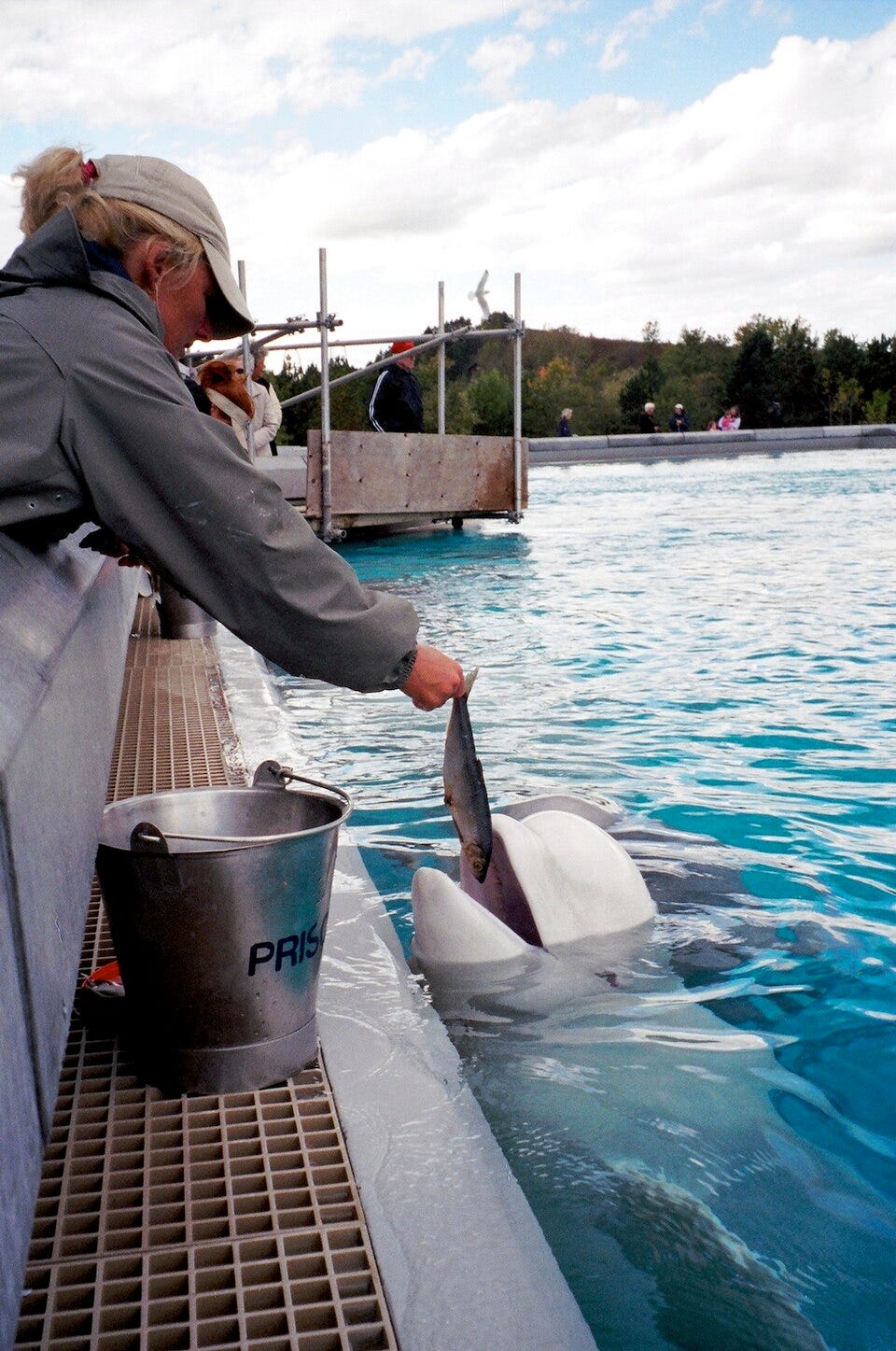
Luckily these captive belugas, who have spent a large part of their life in Marineland at Niagara Falls, Ontario, found homes all over the world. Some will go to Spain, to Oceanogràfic València, while a consortium of American aquariums in Georgia, Chicago, San Diego and San Antonio will take others. For animal advocacy groups the move is considered the “least worst option,” said the Guardian in their ongoing coverage of this story.

If this story sounds familiar, that is because it is. A similar situation is playing out in southern France with a Marineland there, and around the world, as animal rights activists are petitioning to close down dolphin and whale shows permanently, leaving these captive animals in a legal limbo.
It is too costly to maintain the animals without the paid shows. Scientists say releasing captive whales into the wild, Free Willy-style, would be a death sentence. Countries that would take them for their own wildlife shows, like China or the United Arab Emirates, are often barred, because animal rights activists don’t want to encourage these shows anywhere in the world.
File this under: no good deed goes unpunished. Because in truth, stopping whale, dolphin, porpoise or seal captivity is backed by decades of research. Scientifically speaking, these animals are too large and too social for a life in cement box. Their feeding patterns, which are over huge swathes of open ocean and include long dives to hundreds of feet deep, make their aquariums look like a walking desk.
The effects of inadequate living conditions shows up in the data: captive cetaceans exhibit markers of poor welfare and have higher rates of mortality than their wild counterparts. “Not one marine mammal is adapted to thrive in the world we’ve made for them in a concrete box,” said Naomi Rose, a marine mammal scientist at the Animal Welfare Institute, a nonprofit organization based in Washington, D.C., to National Geographic.
From the perspective of animal rights activists, this work to make dolphin shows illegal will eventually mean that no animals are mistreated. For the 3,700 captive whales and dolphins scattered around the world in 56 difference countries, there is some hope. Since 2016, the anti-marine mammal captivity movement has gained significant momentum and now countries from the United States to France to Belgium to Mexico have all passed laws stopping this kind of entertainment.
A few organizations trying to build sanctuaries for these formerly captive animals to live out the rest of their days. The Whale Sanctuary is aiming to build a sanctuary in Nova Scotia, Canada. In Poland, a seal sanctuary called Fokarium w Helu works with the University of Gdansk to rehabilitate captive and sick seals, eventually returning them to the Baltic Sea. And in the meantime, we can all consider stopping attending dolphin or whale shows.
Other Marine News:
El Niño has officially formed, according to American meteorologists. It is the cyclical warmer weather pattern over parts of the Pacific that causes more extreme weather across the planet. The United Nations secretary-general says that El Niño conditions will pour fuel on the fire of an already warming world. More on this story by Seth Borenstein at the Associated Press.
China is officially the first country in the world to run an underwater data center powered by wind. Located off the coast of Shanghai, the center is submerged at a depth of 10 meters, which allows seawater to be used as a natural cooling system. This is a huge innovation as energy cooling infrastructure is typically a huge part of data centers electricity spend, often up to 50% of total usage; using seawaters to cool data centers takes that electricity spend to around 10%. Here’s Fernanda Gonzalez’s story on WIRED with more details.

Across the Pacific and Indian Ocean, atoll nations are facing the first impacts of climate change. They are also hot beds for biodiversity and a refugia for coral reefs. To help these frontline communities, scientists combined 30,000 individual records to a create an interactive database on 310 Indo-Pacific atolls that will help scientists understand how warming waters and rising seas are effecting these islands over time, using Artificial Intelligence to help organize the information. More on the database here.
600 residents of Chiang Mai and Chiang Rai provinces in Thailand embarked on a six-day peace walk to demand that the Thai government take action on river pollution, after their rivers were reported with dangerous levels of arsenic, mercury, cadmium and other heavy metals. For more on this story, check out Gerald Flynn’s reporting for Mongabay.
Living and working for 20 years on the island of Linosa, described as “a rock in the sea” in the middle of the Mediterranean, Italian naturalist Giacomo Dell’Omo has dedicated his life to saving the Sheatwater seabird. Read more of this heartening story by Claudia de Luca for Oceanographic Magazine.

After invasive rats are removed from island, marine wildlife rebounds, according to recent research. American NGO Island Conservation conducted an experiment on Ulong Island in Palau, finding that after rat removals, seabird populations rebounded between 50% to 286%, and fish biomass increased around 183%. Since rats prey on seabird populations, especially eggs and baby chicks, scientists believe that by eliminating invasive rats, seabirds can rebound, which then leads to more phytoplankton in the water, which provides more food for marine animals.
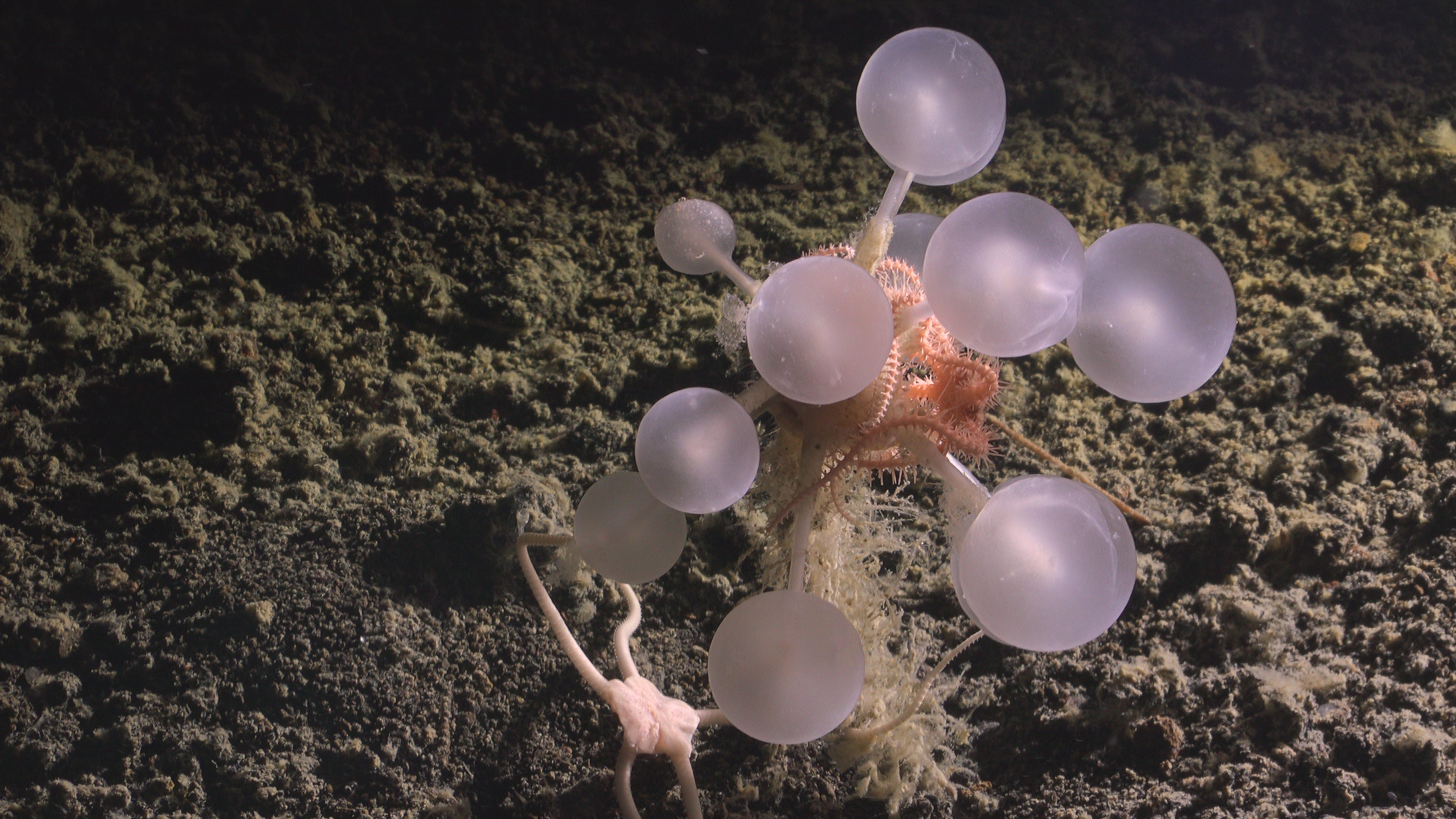
Ocean Census just announced the discovery of 1,121 new marine species in 12 months. Fun species included a ghost shark from 800 meters in Australia’s Coral Sea; tiny ribbon worms from Timor-Leste whose coloring signals are being investigated as treatments for Alzheimer’s and schizophrenia; and a flapjack octopus whose skin can see and mimic surrounding patterns. Full press release here.
Right now, there is a race to document marine species before its too late. There is an estimated two million marine species, but humanity has only discovered 250,000. What is really interesting is that these expeditions which are quite expensive, are being funded by non-government organizations, including the Schmidt Ocean Institute and OceanX.
Ocean Animal of the Week: Dalhousiella yabukii or “Glass Castle Symbiotic Worm”
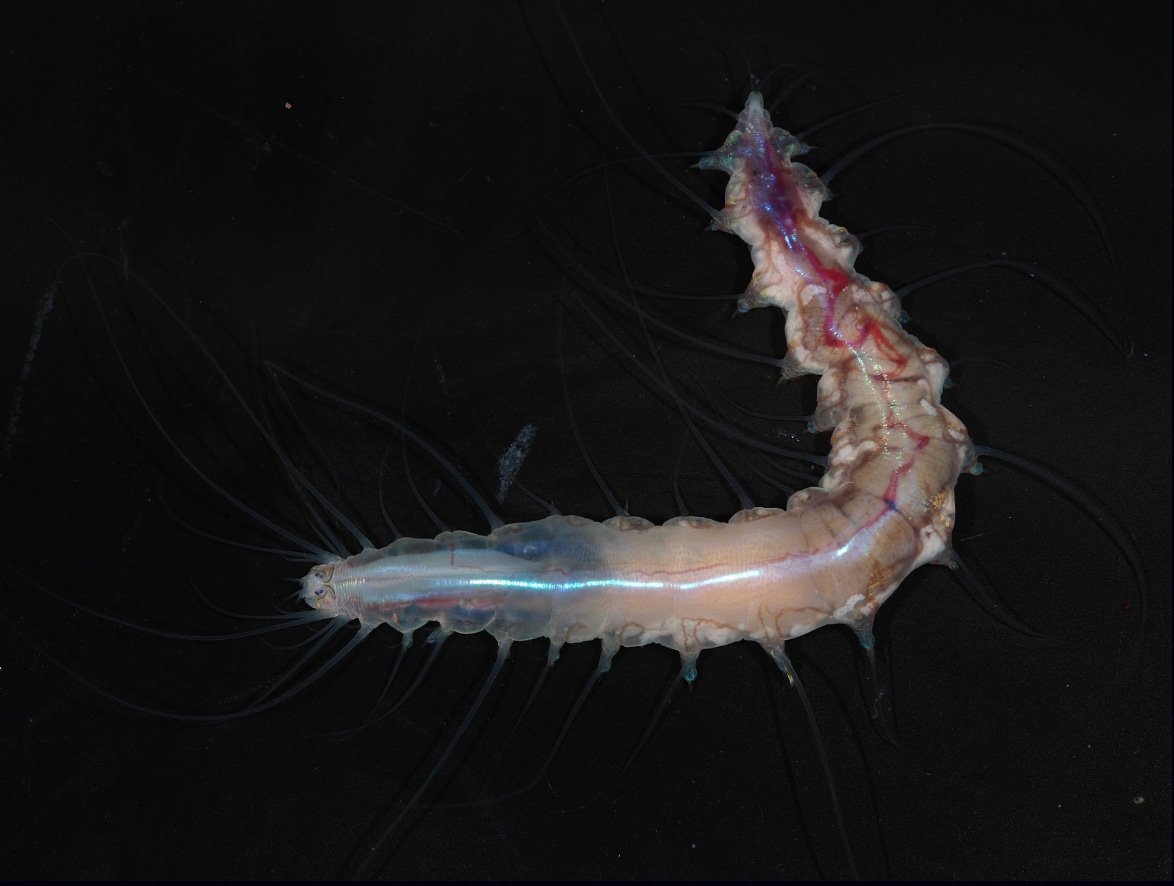
Discovered at 791 meter or 2,500 feet on the Shichiyo Seamount Chain in Japan, this worm lives inside its own glass castle, which is really a sponge with a skeleton made of crystalline silica. It was discovered by Dr Nato Jimi and published in The Zoological Journal of the Linnean Society, during the 2025 Ocean Census JAMSTEC-Shinkai Japan expedition.
Thanks for reading and thanks to 11th Hour Racing for supporting this newsletter.

As always, stay salty,
Alexandra